
Close the Gap From a Missing Tooth With a Fixed Bridge
It started with one lost tooth. Now food packs into the space every time you eat, you chew on the other side, and the teeth beside the gap look like they’re starting to tip. A gap left open can let neighboring teeth drift and change how your bite comes together.
A dental bridge fills that space with a replacement tooth anchored to the neighboring teeth or to dental implants. It stays in your mouth like your own teeth, so there’s nothing to take out at night. Our dentists can tell you whether a bridge fits your gap. Call (505) 327-4863 to schedule an appointment. We welcome new patients at our Farmington dental office!
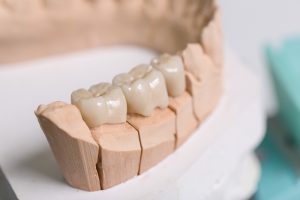
Is a Bridge the Right Fit for Your Gap?
A bridge is often a good choice when the following are true:
- You’re missing a tooth, and the teeth around the space are healthy and firmly rooted
- Those neighboring teeth already have large fillings or crowns, so covering them helps them too
- Your gums are healthy, or gum disease has been treated first
- You want a fixed tooth rather than a removable partial
- You’d rather avoid implant surgery, or an implant isn’t an option right now
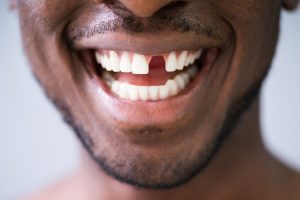
Bridge or Implant?
A traditional bridge is usually finished in a few weeks and doesn’t need surgery. The trade-off is that the teeth next to the gap are reshaped to hold it. An implant leaves those teeth alone and replaces the root, but it takes longer and costs more up front. Still deciding? The choice between a bridge and dental implants in Farmington comes down to your bone, your budget, and the health of the teeth beside the gap, and we’ll go over each one at your exam.
Types of Dental Bridges We Offer
We’ll recommend a type based on where the gap is and how strong the teeth around it are:
- Traditional bridge: Crowns on the two teeth that border the space hold the replacement tooth between them. A three-unit bridge, one tooth plus two crowns, is the most common version.
- Implant-retained bridge: Implants hold the bridge instead of natural teeth, and implant-retained bridges suit several missing teeth in a row.
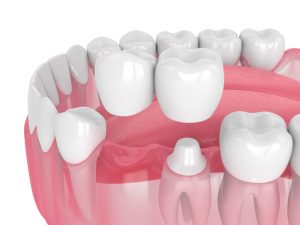
What a Bridge Is Made Of
Every bridge has the same basic parts. The replacement tooth that sits in the gap is called a pontic. On a traditional bridge, it’s joined to crowns on the teeth at each end of the space, and those anchor teeth carry the bite. We choose materials that blend with the shade of the teeth beside the gap.
Front Teeth or Back Teeth
Where the gap sits changes what we plan for. A bridge for a back tooth takes the heaviest chewing force, so the anchor teeth on each side need strong roots and enough structure to hold crowns. For a front tooth, the focus shifts to the shade, the shape, and how the replacement tooth meets the gum, since that edge shows when you smile. We’ll look at both your bite and your smile line before we prepare anything.
Why Patients Choose Us for Their Bridge
A bridge depends on the teeth and gums holding it, so our Farmington dentists check both before recommending one:
- Implant training on the team: Dr. Gene Hilton belongs to the American Academy of Implant Dentistry, so you can weigh a bridge against an implant with a dentist who knows both.
- Gum care before the bridge: Our hygienists bring over five decades of experience between them, and they treat gum problems before we prepare the anchor teeth.

Planning a Bridge After a Tooth Is Pulled
If the tooth hasn’t come out yet, or it was just removed, the bridge waits for the gum and bone to heal. The ridge where the tooth was shrinks a little as it heals, and a bridge made too early may leave a space under the replacement tooth that fills with food. Healing often takes a few months.
We can do tooth extractions and plan the bridge in the same course of care, so you’ll know the timing before the tooth comes out. If the gap shows when you smile, ask about a temporary tooth for the healing months.
From Prep to Your Permanent Dental Bridge
Plan on two appointments for a traditional bridge at our Farmington dental office:
- Checking the gap: We look at the space, the roots of the teeth beside it, and your gums, and we go over the cost before treatment.
- Preparing the anchor teeth: After numbing the area, we reshape the teeth on each side so crowns can fit over them.
- Scan and temporary bridge: We record the prepared teeth with a scanner or impression tray, and you wear a temporary bridge while a dental lab makes your permanent one.
- Seating your bridge: When the lab returns it, we try it in, fine-tune how your teeth meet, and bond it permanently.
- Follow-up: We check the bridge at your next visit and show you how to clean under it.
Tired of chewing around an empty space? Our dental bridge team can check your gap at (505) 327-4863.
The First Few Weeks With Your Bridge
A new bridge can feel bulky for a few days while your tongue and cheeks learn its shape. Chewing usually feels normal again within a week or two, and starting with softer foods cut into small pieces helps. A bridge across the front teeth can change how a few sounds come out at first; reading aloud helps your speech settle. The anchor teeth may be sensitive to cold for a short time after they’re reshaped.
Keeping Your Bridge Clean
Food and plaque collect under the replacement tooth, where a toothbrush can’t reach. A floss threader or water flosser cleans that space, and regular cleanings help protect the anchor teeth from decay and gum disease.

Signs Your Bridge Needs a Check
A bridge that’s been in place for years can still run into trouble, usually at the anchor teeth. Call us if you notice any of the following:
- The bridge moves or rocks when you bite
- An anchor tooth aches or turns sensitive after years of feeling fine
- A bad taste or smell keeps coming back from under the bridge
- The replacement tooth chips or cracks
- Your gums around the bridge bleed or look swollen
A First Visit, in a Patient’s Words
A bridge takes two appointments, so the wait and the welcome matter. A first-time patient from Gallup wrote this on our testimonials page:
“This was my first visit to Desert Hills Dental Care and the service was excellent. I did not have to wait at all and was very happy I decided to make the trip to Farmington from Gallup.” – C.B., Gallup
Frequently Asked Questions
Does dental insurance cover a bridge?
Dental insurance often pays part of a bridge, since it replaces a missing tooth. How much it covers depends on your plan and how much of your annual maximum is left. Our front desk can look up your benefits before your bridge appointment.
How many teeth can a bridge replace?
A bridge usually replaces one to three teeth in a row. Longer gaps put more strain on the anchor teeth, so an implant-retained bridge or a partial denture is often a better fit for them.
How long does a dental bridge last?
A dental bridge can last many years with good home care and regular checkups. Keeping the anchor teeth free of decay is the biggest factor, because the bridge is only as strong as the teeth holding it.
Can an old bridge be redone?
An old bridge can be redone when it wears, loosens, or an anchor tooth gets decay. We remove it, treat the anchor teeth, and make a new one. If an anchor tooth is too damaged to keep, we’ll go over other ways to fill the space.
Can I get a bridge if I grind my teeth?
You can often get a bridge if you grind your teeth, but grinding puts extra force on the anchor teeth and the replacement tooth. We may suggest a custom night guard to wear while you sleep to protect the bridge.
Fill the Space in Your Smile at Desert Hills Dental Care
Filling a gap sooner helps keep your other teeth where they belong. Bridge patients travel to our Farmington office from Aztec, Bloomfield, Kirtland, and Shiprock.
Call our Farmington dentists at (505) 327-4863 or request an appointment online to schedule your dental bridge consultation at Desert Hills Dental Care.